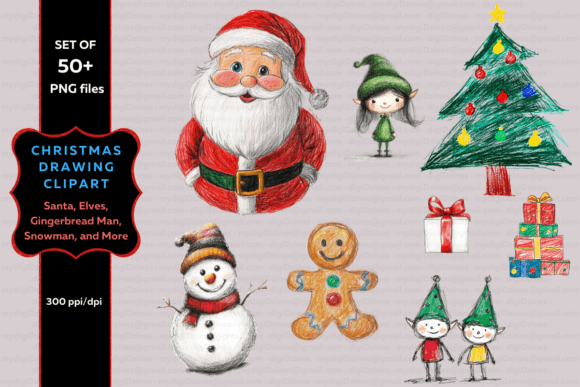
Reviewing Christmas Drawing Clipart for Embroidery
As a designer who has spent countless hours digitizing and stitching out holiday motifs, I approach every new Christmas Drawing Clipart with a mix of excitement and healthy skepticism. We have all been there: you find a charming illustration online, envision it perfectly stitched on a cozy sweatshirt, only to realize later that the lines are too thin for a satin stitch or the details vanish into the fabric texture. Today, I am evaluating this specific set of illustrations not just as digital art, but as a viable candidate for real-world machine embroidery design projects.
First Impressions and Visual Personality
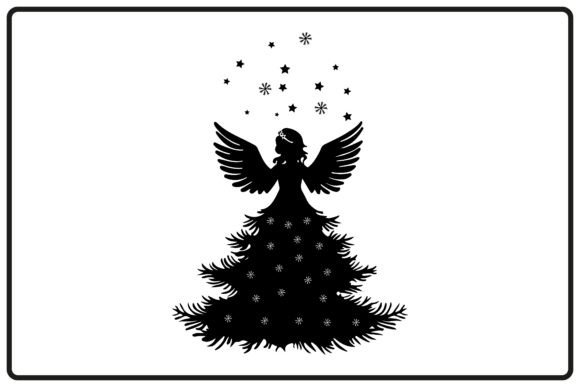
The immediate appeal of this Christmas Drawing Clipart lies in its hand-drawn aesthetic. Unlike rigid, vector-perfect graphics, these illustrations carry a warmth that translates beautifully into thread. The mood is nostalgic and whimsical, avoiding the overly commercial look that plagues so many holiday assets. For an embroidery project, this organic feel is crucial. It suggests a handmade quality that customers actively seek out during the holiday season.
When I look at the line work, I am assessing how it will convert to stitches. The shapes are generally clean, with closed loops that are essential for proper fill stitching. However, the charm often resides in the imperfections—the slight wobble of a branch or the irregular curve of a ornament. As a reviewer, my job is to determine if these artistic choices survive the translation from screen to hoop. In this case, the simplicity of the design works in its favor. It avoids the trap of excessive detail that leads to thread breaks and bird nests.
Real-World Application: The Custom Tote Bag Test
To truly understand the value of these Illustrations, I mentally placed them on a canvas tote bag, a staple for any Etsy seller or craft business. Canvas has a visible weave, which can swallow up fine details. I imagined stitching a medium-sized motif from the clipart set onto a natural cotton canvas. The result? The bold outlines of the drawing hold up well. The design does not rely on microscopic details, which means it remains legible even on textured fabrics.
This versatility extends to other popular items. Imagine this design on a sweatshirt embroidery project. The softness of the fleece requires a design that isn’t too dense, or it will pucker the fabric. Because the Christmas Drawing Clipart features open spaces and balanced composition, it allows the fabric to breathe. It would also make a delightful personalized gift when paired with a name in a complementary script font. For baby embroidery, such as a onesie or burp cloth, the gentle lines are safe and appealing, provided the scale is reduced appropriately to fit smaller hoop size constraints.
Navigating Technical Challenges
While the aesthetic is strong, practical application requires caution. Not every piece of clipart is ready for the needle without adjustment. If you are planning to use these designs on stretchy fabrics like jersey knits for custom apparel, you must pay attention to stitch density. A design that looks light on screen can become heavy once digitized with standard underlay and top stitches. I recommend testing the design on scrap fabric first, specifically using the same stabilizer you intend to use for the final product.
Another critical consideration is the method of stitching. Some elements in the clipart might look like they should be filled, but a running stitch or a lightweight satin stitch border might preserve the hand-drawn feel better than a heavy fill stitch. For darker fabrics, you need to ensure your thread colors provide enough contrast. A dark green tree on a navy sweatshirt will disappear. This is where the flexibility of the clipart shines; because the lines are distinct, you can easily recolor the design in your digitizing software to suit high-contrast needs.
Curved surfaces, such as caps, present another challenge. The embroidered patch route might be safer here. By stitching the design onto a separate piece of fabric and then applying it as a patch, you avoid the distortion caused by sewing directly onto the curved brim of a hat. This technique also adds a premium, boutique feel to the finished product.
Enhancing Brand Value and Customer Trust
For small shop product creators, the choice of design assets directly impacts brand perception. Using generic, low-quality clipart can make a brand look amateurish. However, curated design assets like this Christmas Drawing Clipart elevate the perceived value of the item. When a customer sees a clean, well-executed holiday design on a kitchen towel or pillow cover, they associate that quality with your brand. It builds trust and encourages repeat business.
Furthermore, these illustrations are excellent for creating printable mockup previews for your online store. Before you even stitch a single thread, you can place the digital file onto product photos to gauge visual appeal. This saves time and materials, allowing you to test different color combinations and placements virtually. It is a smart strategy for any commercial embroidery operation looking to streamline workflow.
Practical Notes for the Embroiderer
Before you purchase or download any digital embroidery file, there are several steps you must take to ensure success. First, verify the licensing. Can you use this Christmas Drawing Clipart for commercial purposes? Most designers allow it, but always check the terms to protect your craft business. Second, inspect the file formats. Ensure you have the correct format for your machine, whether it is PES, DST, or JEF.
- Test on Scrap Fabric: Never stitch directly on your final garment. Use a similar weight and texture to check for puckering or registration issues.
- Check Thread Contrast: View the design in black and white to ensure the lines stand out regardless of color choice.
- Adjust Density: If the design feels too stiff after testing, reduce the stitch density in your digitizing software.
- Consider Stabilizer: Use a cut-away stabilizer for stretchy fabrics and tear-away for woven fabrics to support the stitch structure.
- Scale Appropriately: Ensure the design fits within your hoop limits without losing clarity. Tiny details may need to be simplified or enlarged.
In conclusion, this Christmas Drawing Clipart offers a solid foundation for holiday-themed projects. Its strength lies in its simplicity and charm, which translate well to various textiles. By approaching it with a designer’s eye—considering fabric texture, stitch type, and end-use—you can create stunning holiday embroidery pieces that resonate with customers. Whether you are making a single personalized gift or stocking your Etsy shop for the season, these illustrations provide the creative spark needed to produce memorable, high-quality work.