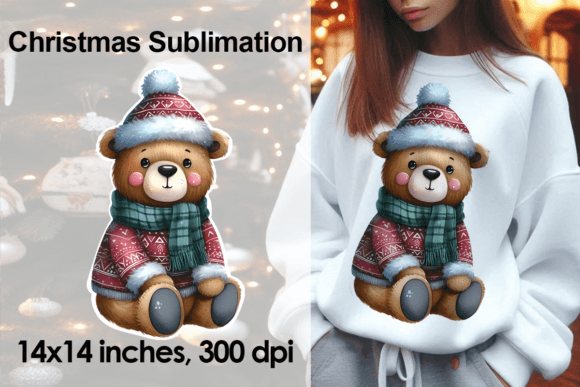
Review: Christmas Teddy Bear Sticker PNG for Embroidery
As a designer who spends more time staring at stitch simulations than I do sleeping, I have learned to be skeptical of digital assets that promise charm without delivering structural integrity. When I first pulled up the Christmas Teddy Bear Sticker PNG, my initial reaction was not just about cuteness, though it certainly has that in spades. My immediate thought was practical: how will this translate from a flat, pixel-based illustration into a textured, thread-based reality? For those of us running a craft business or managing an Etsy shop, the gap between a pretty preview and a sellable finished product is where profits are made or lost.
First Impressions and Visual Personality
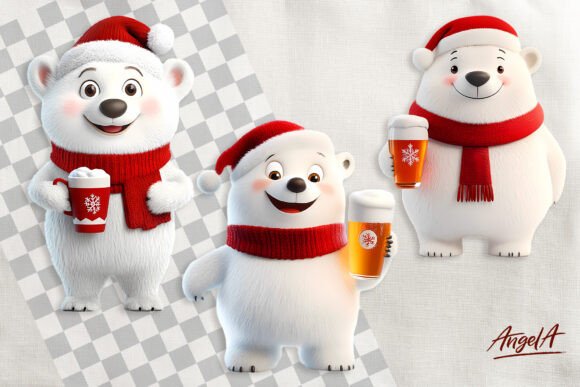
The design falls squarely into the category of Illustrations that rely on bold shapes and clear emotional cues. The teddy bear motif is a perennial favorite in holiday embroidery, but execution varies wildly. This particular asset presents a clean, cohesive silhouette that suggests it was designed with modern digitizing principles in mind. The mood is warm, nostalgic, and inviting—perfect for the current trend of cozy, hygge-inspired home decor and apparel.
What stands out most is the balance of detail. It is not so intricate that it demands hours of machine time, nor is it so simplistic that it looks amateurish on a high-end garment. For an embroidery project, this balance is critical. The visual personality feels approachable, making it an ideal candidate for personalized gifts where the recipient values sentiment over complex artistry. However, as a reviewer, I look past the surface. I examine the lines for potential stitching issues. The curves appear smooth, which is a good sign for satin stitch application, while the broader areas likely require a well-balanced fill stitch to prevent puckering.
Real-World Application: The Tote Bag Test
To truly evaluate the Christmas Teddy Bear Sticker PNG, I mentally placed it into a common real-life scenario: a custom embroidered tote bag for a holiday market. Tote bags are unforgiving. They use heavier canvas fabrics that can resist needle penetration, and they are subject to frequent washing and heavy loads. If a design is too dense, the fabric will warp. If it is too loose, the background fabric will show through, ruining the aesthetic.
In this context, the design performs well because of its contained shape. It does not sprawl unnecessarily, allowing it to sit comfortably within a standard 5x7 or 6x10 hoop size. For a sweatshirt embroidery project, this same containment is beneficial. Large, sprawling designs on chest areas can feel heavy and uncomfortable against the skin. A compact, well-defined bear creates a focal point without weighing down the garment. This makes it versatile for both baby embroidery items, where softness is paramount, and adult custom apparel, where style and comfort intersect.
Versatility Across Product Lines
Beyond totes and sweatshirts, this design asset shows promise in several other areas relevant to small shop products. Consider an embroidered patch. Patches require tight, dense stitching to hold their shape when cut away from the backing fabric. If the Christmas Teddy Bear Sticker PNG is digitized with appropriate underlay and border stitches, it could become a best-selling iron-on or sew-on accessory. Similarly, for kitchen towels or aprons, the holiday theme adds seasonal value. Holiday embroidery sells quickly in November and December, and having a reliable, quick-stitching design allows makers to fulfill bulk orders without burning out their machines.
For digital product sellers, this image serves as an excellent base for printable mockups. Before you even stitch a single thread, you can overlay this graphic onto photos of blank garments to gauge customer interest. This reduces waste and helps in planning inventory for your craft business. It acts as a bridge between the digital embroidery file and the physical handmade product, allowing for better marketing visuals on social media and Etsy listings.
Technical Considerations and Fabric Constraints
While the design is charming, we must discuss where it requires caution. Not every fabric behaves the same way. If you are working with stretchy fabric, such as a jersey knit t-shirt, stitch density becomes your enemy. A high-density fill stitch on a stretchy material will cause the fabric to pucker and bubble around the bear. In these cases, I recommend using a cut-away stabilizer rather than a tear-away to provide ongoing support. Additionally, checking the thread colors against the fabric texture is essential. On dark fabric, light-colored threads may require a higher stitch count to achieve full coverage, which increases production time.
Curved surfaces, like caps or hats, present another challenge. The front panel of a cap is stiff, but the curvature can distort designs if they are too wide. Since this teddy bear design appears relatively compact, it is likely suitable for cap embroidery, provided you use a proper hooping technique and perhaps a foam underlay to raise the stitches for a 3D effect. However, always test on scrap fabric first. Never assume a digital embroidery file will behave perfectly on your specific machine without a trial run.
Another critical area is small details. If the design includes tiny elements like eyes or nose details, ensure they are not so small that they get lost in the thread bulk. Running stitch outlines can sometimes break or look sparse if the scale is reduced too much. If you plan to shrink the design for a baby onesie or a small ornament, inspect the preview closely. You may need to simplify certain elements or increase the size slightly to maintain stitching clarity.
Enhancing Brand Value and Customer Trust
Why does the quality of a single design matter to your brand consistency? Because customers associate the precision of your stitching with the quality of your entire shop. A sloppy, puckered bear suggests carelessness. A crisp, clean bear suggests professionalism. Using a well-structured Christmas Teddy Bear Sticker PNG helps build buyer engagement. When customers see a polished finished product, they are more likely to leave positive reviews and return for future purchases.
This design also aids in giftability. Personalized gifts often carry emotional weight. A teddy bear is inherently comforting. By placing this image on a high-quality blanket or pillow cover, you elevate the item from a simple commodity to a cherished keepsake. This perception of value allows you to price your handmade products more competitively. It is not just about the cost of thread and fabric; it is about the design’s ability to evoke emotion.
Final Designer Notes
Before you commit to a large production run, take these practical steps. First, confirm the licensing terms. Ensure that the commercial embroidery license covers the number of units you plan to sell. Second, review the stitch density settings in your digitizing software if you have access to the source file, or check the preview if you are using a pre-digitized version. Third, compare how the design looks on both light and dark backgrounds. You may need to adjust thread colors to ensure contrast and visibility.
Finally, remember that while the Christmas Teddy Bear Sticker PNG provides the visual blueprint, your skill in hooping, stabilizing, and thread selection brings it to life. Treat this design as a tool in your arsenal—one that, when used correctly, can significantly enhance your holiday collection. Whether you are creating boutique branding items or one-off personalized gifts, this design offers a solid foundation for professional, appealing results. Always prioritize testing, respect the limitations of your materials, and let the quality of your stitch work speak for itself.